Tiny: A Bold Statement in 3D Balloon Typography
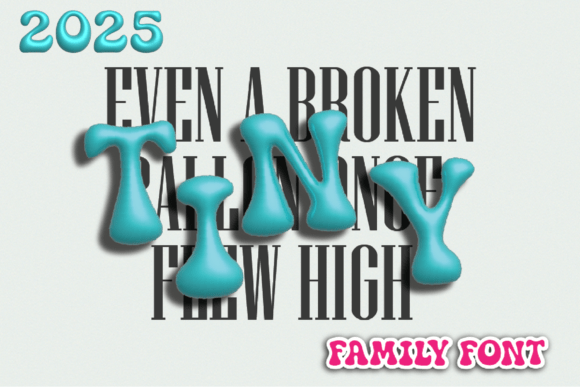
When a design calls for immediate impact and a dose of playful energy, the choice of typeface is paramount. Enter Tiny, a striking SVG font that captures the essence of celebratory flair. Far from its name, this typeface makes a massive impression with its brazen gold, 3D-style balloon aesthetic. It’s a specialized creative font designed not for body text, but for moments that demand center stage. As an SVG font, Tiny leverages high-resolution raster images embedded within the font file, allowing for intricate detail, realistic textures, and depth that standard vector fonts cannot achieve. This isn't just a set of letters; it's a complete visual asset, perfect for designers and creators looking to inject instant glamour and fun into their projects.
Visual Character and Practical Application
The visual personality of Tiny is unmistakable. Each glyph appears as a inflated, shiny gold balloon, complete with highlights and shadows that give it a tangible, three-dimensional form. This style leans heavily into a festive, luxurious, and youthful vibe, making it an excellent choice for projects related to parties, celebrations, beauty, fashion, or any brand that wants to communicate joy and opulence. It functions as a powerful display font, ideal for short, high-impact text like headlines, logos, social media post titles, and event invitations. Its unique texture makes it a standout piece in any designer's toolkit of design assets.
Understanding its technical specifications is key to using Tiny effectively. It's crucial to note that as a bitmap-based SVG font, its compatibility is limited. It works seamlessly in Adobe Photoshop CC 2017 and newer, Adobe Illustrator CC 2018 and newer, and Procreate 4.3 or later. The font is optimized for digital use, with a maximum recommended height of 700 pixels to maintain crisp detail. For print, it should be used at a size no larger than 5 cm at 300 dpi to prevent quality loss. This makes Tiny perfectly suited for digital banners, YouTube thumbnails, Instagram stories, and e-commerce graphics, but less so for large-format printing like billboards or posters. The included instructions for color adjustment in Photoshop offer flexibility, allowing you to tweak the gold to match specific brand palettes.
Strategic Use in Branding and Design Projects
Incorporating a font like Tiny into a brand identity requires strategic thought. It's not a workhorse serif font or sans serif font for long paragraphs. Instead, it's a specialty tool. For a boutique bakery, event planning service, or children's clothing brand, using Tiny for the main logo or key promotional graphics can instantly establish a fun, premium, and memorable aesthetic. In editorial design, it could be used sparingly for pull quotes or feature article titles in a lifestyle magazine to draw the reader's eye. For packaging design, a small application on a gift box or a holiday product label can elevate the unboxing experience, making the product feel special and celebratory.
The font's influence on visual hierarchy is direct and powerful. Its gold, three-dimensional appearance naturally commands attention, making it the undisputed focal point of any layout. This can be harnessed to guide the viewer's journey through a design, ensuring key messages are seen first. However, readability is a consideration. Tiny is best used for short words or phrases. Pairing it with a clean, neutral font pairing is essential. A simple sans serif font like Montserrat or a classic serif font like Playfair Display for supporting text will balance the exuberance of Tiny, ensuring overall clarity and professionalism. This contrast creates a sophisticated modern typography system where the display font captures attention and the body font delivers the message.
Technical Considerations and Commercial Use
Before committing to Tiny for a project, a practical test is advisable. Always check the specific glyphs and language support you require. While it includes uppercase letters, numbers, and punctuation, verifying the exact character set in your chosen software is a prudent step. For entrepreneurs and small business owners, understanding the licensing is critical. The font's commercial license allows for use in projects for sale, such as merchandise, print-on-demand designs, or client work, provided the terms are followed. It’s important to remember that the color version of the font is not compatible with cutting machines like Cricut for its full-color effect; only the black version will work in those environments.
Ultimately, Tiny is more than just a novelty; it's a targeted solution for specific creative challenges. It excels when you need to create an immediate emotional response—be it excitement, luxury, or nostalgia. When used judiciously and paired thoughtfully with complementary typefaces, it becomes a powerful asset for social media graphics, digital advertising, and branding projects that aim to stand out. It represents a category of premium font that offers unique visual textures, expanding the possibilities of what type can achieve beyond traditional letterforms. For the designer or creator with a clear vision, Tiny provides the exact tool to make that vision pop.