Pumpkin Candy 3D Font: A Bold, Playful Typeface for Halloween Projects
Understanding the Pumpkin Candy 3D Typeface
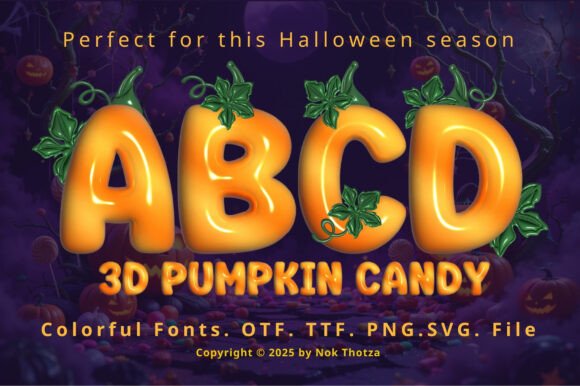
Pumpkin Candy 3D is a display font built around a single, unmistakable concept: the intersection of Halloween pumpkins and glossy, sweet candy aesthetics. Each letterform carries a rounded, bulbous shape reminiscent of carved jack-o'-lanterns, rendered in a vibrant pumpkin-orange hue. The three-dimensional effect gives every character a sense of depth and weight, making text appear to pop off the page or screen.
What sets this creative font apart from other seasonal typefaces is the attention to decorative detail. Leafy vine accents curl around stems and terminals, grounding the playful candy look in something more organic. The glossy finish mimics the sheen of wrapped sweets, which reinforces the candy connection without veering into cartoon territory. It strikes a balance that works for both children's audiences and adult-oriented Halloween events.
As a premium font, Pumpkin Candy 3D is designed as a complete design asset rather than a novelty afterthought. The letter spacing, weight distribution, and dimensional shading are handled with enough care that the typeface holds up across various sizes and applications. For designers and creators who work on seasonal projects, having a reliable display font like this one saves time and elevates the final output.
Where Pumpkin Candy 3D Works Best
The applications for this typeface stretch well beyond simple "Happy Halloween" banners. Think about packaging design for seasonal candy products, limited-edition snack boxes, or boutique bakery labels during October. Pumpkin Candy 3D brings instant visual recognition to these contexts because the font itself communicates the theme before a single word is fully read.
Social media graphics benefit enormously from typefaces with built-in personality. Instagram stories, Facebook event covers, Pinterest pins, and TikTok thumbnails all demand text that grabs attention in a fraction of a second. Pumpkin Candy 3D delivers that snap judgment appeal. Its bold silhouette and saturated color make it readable even at smaller thumbnail sizes, which matters when your audience is scrolling quickly through a crowded feed.
Consider these practical applications where the font shines:
- Halloween party invitations – digital and printed formats
- Spooky posters for events, haunted houses, and community gatherings
- Seasonal packaging for candy brands, bakeries, and specialty food products
- Children's book covers and interior chapter headings with a Halloween theme
- DIY holiday crafts including scrapbooking, greeting cards, and gift tags
- Web design elements for seasonal landing pages and promotional banners
- Brand identity materials for businesses running Halloween campaigns
Small business owners, in particular, find value in a font like this because it solves a recurring problem. Every October, the same question surfaces: how do we make our marketing feel festive without spending a fortune on custom illustration? Pumpkin Candy 3D answers that question by giving you a typeface that carries the entire visual weight of a Halloween theme on its own.
How This Font Influences Design Outcomes
Typography choices shape how audiences perceive content before they process the actual words. A bold, three-dimensional display font like Pumpkin Candy 3D communicates energy, fun, and seasonal relevance in an instant. This matters for brand perception because consistency between a brand's visual language and the occasion it's celebrating builds trust. When a Halloween promotion looks thoughtfully designed, customers respond with more engagement.
Visual hierarchy is another area where Pumpkin Candy 3D proves its worth. Used as a headline or title font, it naturally commands the top of the hierarchy without competing against body text. Pair it with a clean sans serif font for supporting copy, and the contrast creates an immediate reading path. The eye lands on the festive headline first, then flows into the details. This kind of hierarchy is fundamental to effective editorial design and marketing collateral.
A few observations from working with decorative typefaces like this one:
- Limit it to headlines and short phrases. Pumpkin Candy 3D is a display font, which means it's engineered for impact at larger sizes. Setting a full paragraph in this typeface would compromise readability and dilute its visual punch.
- Test your font pairings early. Before committing to a full design, set a few mockups combining Pumpkin Candy 3D with a serif font or a sans serif font for body text. A geometric sans serif often pairs well because its clean lines don't compete with the font's decorative curves.
- Consider the color context. The default pumpkin-orange is striking, but the font's three-dimensional shading means it interacts with background colors. Dark backgrounds—deep purple, black, forest green—make the orange glow. Light backgrounds work too, but the contrast is softer.
- Review the full character set. Before purchasing any commercial font, check that it includes the glyphs your project requires. Punctuation, numerals, and extended Latin characters matter if you're creating content for diverse audiences or multilingual campaigns.
Choosing and Using Pumpkin Candy 3D Responsibly
Licensing is a detail that separates professional designers from hobbyists, though both groups benefit from understanding it. Pumpkin Candy 3D, like most premium fonts, comes with specific terms that dictate how the typeface can be used. A standard desktop license typically covers printed materials and static images, while digital applications like web design or app interfaces may require an additional web font license. Always read the licensing agreement before embedding the font in client work or commercial products.
Evaluating project fit is straightforward once you understand the font's personality. Pumpkin Candy 3D is festive, bold, and inherently seasonal. It works beautifully for Halloween-themed projects, autumn harvest events, candy shop branding, and anything targeting a younger demographic during October. It would feel out of place in a corporate annual report, a minimalist fashion brand, or a luxury product launch. Context matters, and recognizing where a creative font belongs is part of good design practice.
For logo design applications, proceed with care. A highly stylized typeface can anchor a seasonal sub-brand or a limited-edition product line, but it shouldn't serve as the primary wordmark for a year-round business. If you're designing a Halloween event logo or a themed product label, Pumpkin Candy 3D can work as a starting point, but custom modifications—adjusting letter spacing, modifying specific characters, or integrating illustration—will make the result feel unique rather than templated.
Pairing Pumpkin Candy 3D with Other Typefaces
Font pairing is where many projects succeed or stumble. Pumpkin Candy 3D carries a strong personality, so the supporting typeface needs to complement rather than compete. A few pairings worth exploring:
- With a geometric sans serif – Fonts like Montserrat, Poppins, or Futura provide a clean, modern counterweight. This combination works well for social media graphics and digital marketing where clarity at small sizes is essential.
- With a classic serif – Something like Georgia or Playfair Display adds a touch of elegance that can elevate Halloween content beyond the purely playful. This pairing suits editorial layouts, magazine-style features, or upscale event invitations.
- With a handwritten font – A casual script or handwritten typeface reinforces the playful, craft-oriented feel. This works for DIY project guides, children's activity sheets, and informal party invitations.
The key principle is contrast. If Pumpkin Candy 3D is bold and decorative, the partner font should be restrained. If the headline font is round and glossy, the body font should be angular or neutral. This contrast creates visual rhythm and keeps the overall design from feeling monotonous or overwhelming.
Final Thoughts on Working with Seasonal Display Fonts
Seasonal design assets like Pumpkin Candy 3D earn their place in a designer's toolkit through repeated use. If you create Halloween content annually—whether for your own brand, clients, or personal projects—investing in a well-crafted display font pays off over multiple seasons. The alternative is cycling through free fonts that often lack the refinement, character set depth, and licensing clarity that professional work demands.
Test the font at the sizes and in the contexts where it will actually appear. A typeface that looks magnificent at 120 pixels on your monitor might lose its charm at 36 pixels on a printed invitation, or vice versa. Build a quick proof, print it out or preview it on a phone screen, and evaluate it with fresh eyes. That small step prevents the disappointment of a final product that doesn't match the vision in your head.
Pumpkin Candy 3D brings a specific energy to Halloween and autumn-themed projects. Used thoughtfully—as a headline font, paired with complementary typefaces, and applied within appropriate contexts—it adds a polished, festive touch that audiences notice and respond to. That kind of visual impact, delivered through strong typography choices, is exactly what seasonal campaigns need to stand out.