Embrace the Artistic Spirit of the Falling Leaves Typeface
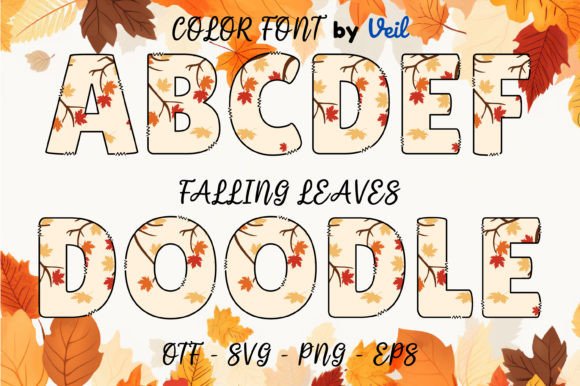
When you are working on a project that demands personality over formality, the typeface you choose becomes the voice of your design. Falling Leaves is a specific category of creative font that captures the essence of organic movement and artistic flair. It is not just a collection of letters; it is a design asset that brings warmth and a handcrafted aesthetic to any visual layout. For designers, entrepreneurs, and publishers, understanding how to deploy this style effectively can be the difference between a project that feels generic and one that feels truly bespoke.
Visual Characteristics and Personality
The primary appeal of Falling Leaves lies in its ability to mimic natural, flowing forms. Unlike rigid geometric typefaces, this style often features irregular baselines, varying stroke widths, and decorative swashes that suggest handwritten or script font origins. The visual personality is undeniably whimsical and artistic. It conveys a sense of playfulness and creativity, making it an excellent choice for projects that need to feel approachable and human.
Visually, you can expect a texture that feels less corporate and more intimate. It functions beautifully as a display font, drawing the eye immediately in headlines or hero sections. However, its complexity means it carries a strong stylistic charge. It is the kind of typeface that tells a story before the reader even processes the words. For brand identity work, this means it can instantly signal that a brand is creative, artisanal, or family-oriented. It stands in stark contrast to the cold efficiency of a standard sans serif font, offering instead a warmth that resonates emotionally with viewers.
Strategic Applications in Design and Branding
Finding the right context for a stylized font is crucial. Because of its decorative nature, Falling Leaves works best in specific scenarios where visual impact outweighs the need for dense information processing.
Publishing and Editorial Design
In the realm of editorial design, particularly within children’s books, this font style shines. Young audiences respond to shapes and colors, and a font that looks like it was drawn by hand creates an engaging reading experience. It breaks down the barrier between the text and the illustration. Beyond children's literature, it is effective for book covers in the romance or lifestyle genres, where the typography needs to evoke a specific mood or atmosphere. Premium font families in this category often include multiple weights or decorative alternates, allowing for dynamic layouts that keep the reader’s eye moving across the page.
Marketing and Packaging Design
For small business owners and marketers, Falling Leaves is a powerful tool for packaging design. If you are selling artisanal goods, organic products, or creative supplies, this typeface reinforces the value of the product inside. It suggests that care and craftsmanship went into the creation of the item. Similarly, in social media graphics, where attention spans are short, a bold, artistic headline using this font can stop the scroll. It adds a layer of visual interest that standard fonts cannot replicate, making your posts feel more like curated art pieces than generic advertisements.
Web Design and Digital Presence
While web design often prioritizes legibility, there are strategic places for a font like Falling Leaves. It is rarely suitable for body copy or UI navigation buttons, but it excels in landing page hero images, promotional banners, or seasonal sale announcements. When used sparingly, it acts as a visual accent that highlights key messages. It pairs exceptionally well with a clean, modern serif font or a neutral sans serif font, creating a balanced hierarchy that guides the user’s attention exactly where you want it.
Practical Guidance for Implementation
Adopting a new typeface involves more than just liking how it looks; it requires a practical assessment of how it functions within your specific ecosystem. Here is how to approach integrating Falling Leaves into your workflow.
- Evaluating Project Fit: Before purchasing or downloading, look at the font in the context of your content. If your project involves long paragraphs of text, this is likely the wrong choice. However, if your project relies on headers, logos, or short, punchy call-outs, it is an ideal candidate.
- Testing Font Pairings: The success of a creative font often depends on its companion. A common mistake is pairing a decorative script with another ornate font. Instead, pair Falling Leaves with something grounded. A geometric sans-serif can provide a modern counterpoint, while a classic serif can add a touch of elegance. The contrast creates visual tension that makes the design pop.
- Reviewing Styles and Glyphs: A high-quality commercial font will come with more than just the basic alphabet. Check for OpenType features such as ligatures, stylistic sets, and alternates. These features allow you to customize the look of the text, ensuring that repeated letters don't look identical, which enhances the natural, handwritten feel.
- Readability Considerations: Always test your type at the size it will be viewed. A font that looks beautiful at 72pt on a design screen might become an unreadable blob at 12pt on a mobile device. Ensure that the letter spacing (tracking) is adjusted if the characters feel too crowded.
- Commercial Licensing: Finally, always verify the license. If you are using the font for logo design or physical products, you typically need a desktop or commercial license. If you are using it for a website via CSS, you may need a webfont license. Respecting these terms protects your business and supports the type designers who create these design assets.
Ultimately, Falling Leaves is more than just a modern typography