St. Patrick’s Day Groovy: A Festive Typeface for Creative Projects
When a holiday approaches, the visual language of our designs needs to shift instantly. We move away from muted corporate palettes and embrace something with more personality. For St. Patrick’s Day, this means capturing a specific mood: lucky, playful, and undeniably green. The challenge is finding a design asset that feels festive without looking cheap or overly childish. This is where the St. Patrick’s Day Groovy font enters the conversation, offering a specific solution for designers who need to inject holiday cheer into their work quickly.
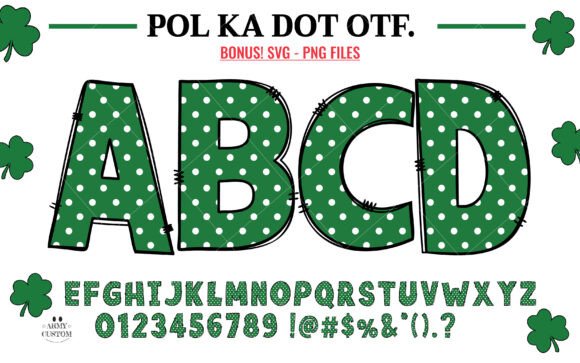
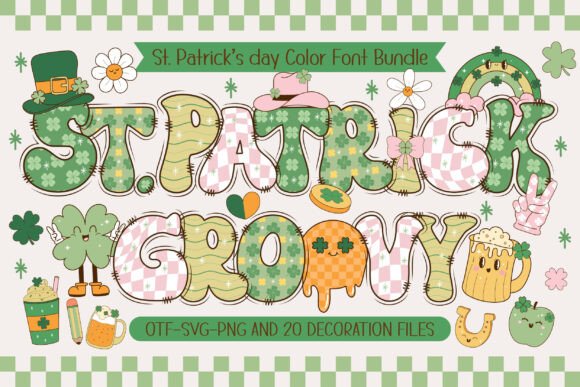
This is not just a standard typeface with a holiday name attached. It is a 4-color font designed specifically to capture the charm of the season. The visual style relies on a cute green color palette and integrates playful elements directly into the letterforms. Because it is a display font, it isn't meant for long paragraphs of body text. Instead, it acts as a focal point. The personality is bold and lucky, designed to grab attention immediately. For a creative font like this, the goal is immediate recognition; when a viewer sees the text, they should feel the festive spirit before they even read the words.
Practical Applications: Where This Font Shines
Understanding the utility of St. Patrick’s Day Groovy means looking at the specific workflows of different creatives. For the small business owner running a seasonal campaign, this font solves the problem of creating quick, high-impact social media graphics. It is ideal for Instagram posts, story announcements, or Facebook ads promoting a flash sale. The visual weight of the font ensures that the message stands out in a crowded feed without needing complex illustration work.
For those involved in packaging design or physical products, the applications are equally broad. Consider a crafter creating lucky T-shirts or a baker designing gift tags for cookies. The font provides a cohesive look that ties the product to the holiday. It works exceptionally well for custom name projects, perhaps for party invitations or personalized merchandise. However, it is important to note the technical limitations. The black version of this font is compatible with Cricut Design Space and other cutting machines, making it accessible for vinyl cutting and paper crafts. However, the color version—the one with the green palette and integrated doodles—is only compatible with specific software like Adobe Photoshop, Illustrator, Silhouette Studio, and Inkscape.
Design Strategy and Visual Hierarchy
Using a premium font like this effectively requires a bit of strategic thinking regarding visual hierarchy. Because St. Patrick’s Day Groovy is a display font with high visual noise (due to the integrated elements and colors), it demands contrast. It should be used for headlines, logos, or short call-to-action phrases. If you pair it with a busy background image, the text may get lost.
The font influences brand perception by signaling that a brand is approachable, fun, and seasonal. It moves a brand identity away from "serious corporate" toward "community-focused and playful." This is particularly useful for bloggers and publishers looking to create engaging headers for articles about recipes, party planning, or history. The inclusion of 20 matching bonus doodles is a significant value-add for design assets. These doodles allow you to create a cohesive ecosystem around the typography. You can use them as bullet points, background textures, or standalone icons to fill negative space in a layout.
Evaluating Fit and Font Pairing
One of the most common mistakes in modern typography is using two decorative fonts that fight for attention. Because St. Patrick’s Day Groovy has a strong, groovy personality, it pairs best with simple, neutral typefaces. A clean sans serif font for body text is usually the safest bet. The sans serif provides the necessary legibility for longer descriptions while allowing the display font to own the spotlight.
Alternatively, if you are going for a more traditional or rustic aesthetic, pairing it with a simple serif font can create an interesting contrast between the "groovy" modern shapes and classic typography. However, avoid pairing it with a script font or another handwritten font, as this usually creates visual chaos. The goal is readability and balance. You want the viewer to understand the message instantly, not struggle to decipher the characters.
Technical Considerations and Workflow
Before committing to St. Patrick’s Day Groovy for a large-scale project, it is wise to test the workflow. If you are a designer working in Adobe Illustrator, you have full control over the color version. This allows you to scale the font for print materials like posters or banners without losing quality. However, if your primary output is for web design, ensure that you are exporting the text as graphics (PNG or SVG) rather than live text, as web browsers generally do not support multi-color fonts in the same way desktop design software does.
For crafters using cutting machines, the distinction between the color and black versions is crucial. You cannot send the color OTF/TTF files directly to a Cricut machine for cutting. You must use the black version to create the cut paths, and then manually color the layers if you are doing a print-then-cut project. This is a technical reality of multi-color fonts that is often overlooked until the final stage of production.
Final Thoughts on Versatility
Ultimately, St. Patrick’s Day Groovy is a specialized tool. It is not a workhorse font for your entire brand identity, but rather a seasonal accent that can elevate specific campaigns. Whether you are designing for editorial design, logo design for a seasonal event, or personal crafting, it offers a distinct aesthetic that is difficult to replicate with standard black-and-white typefaces. By treating it as a highlight element and pairing it with cleaner typefaces, you can create professional, engaging, and festive designs that resonate with your audience.